
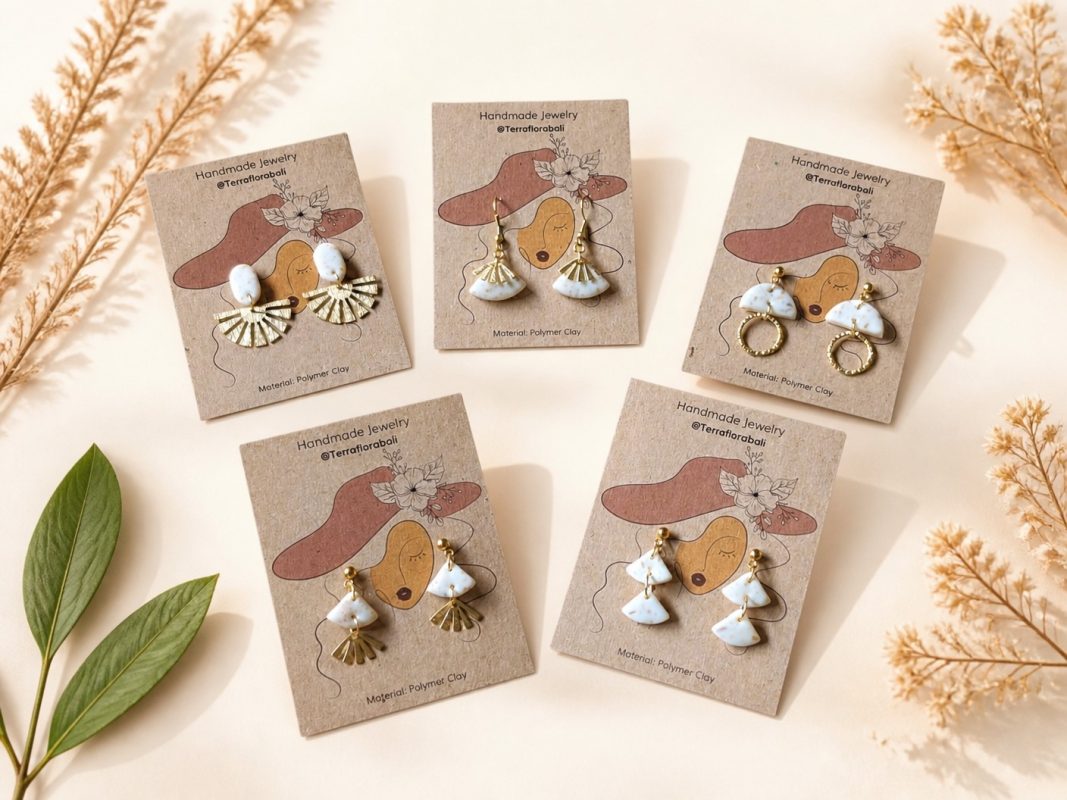
Colorful flowers, tiny cats, abstract shapes, shells that look like I picked them up on the beach that morning — polymer clay earrings can turn into almost anything, which is exactly why I ended up making them for a living.
If you are here because you are thinking about buying a pair, here are the three answers you probably came for. They are light: mine run about 1.3 to 2 grams per earring, and the actual numbers are in the table below. They last for years with ordinary care, although they are not indestructible. Moreover, you can wear most of them without pierced ears at all.
Everything else — water, cleaning, earring posts, how a pair actually gets made — is below, with real figures rather than adjectives.
- Weight: roughly 1.3–2 g per earring for my designs. Length is a poor guide — my longest pair is not my heaviest.
- Water: polymer clay is waterproof, but air-dry clay is not — and neither is the metal. So no showering or swimming.
- Fastenings: stainless steel stud, plastic hypoallergenic stud, or clip-on for non-pierced ears.
- Handmade variation is normal — no two pairs are identical, and that is the point.
- Before buying, look for stated grams, dimensions and post material. If a care guide recommends acetone, walk away.
What are polymer clay earrings?
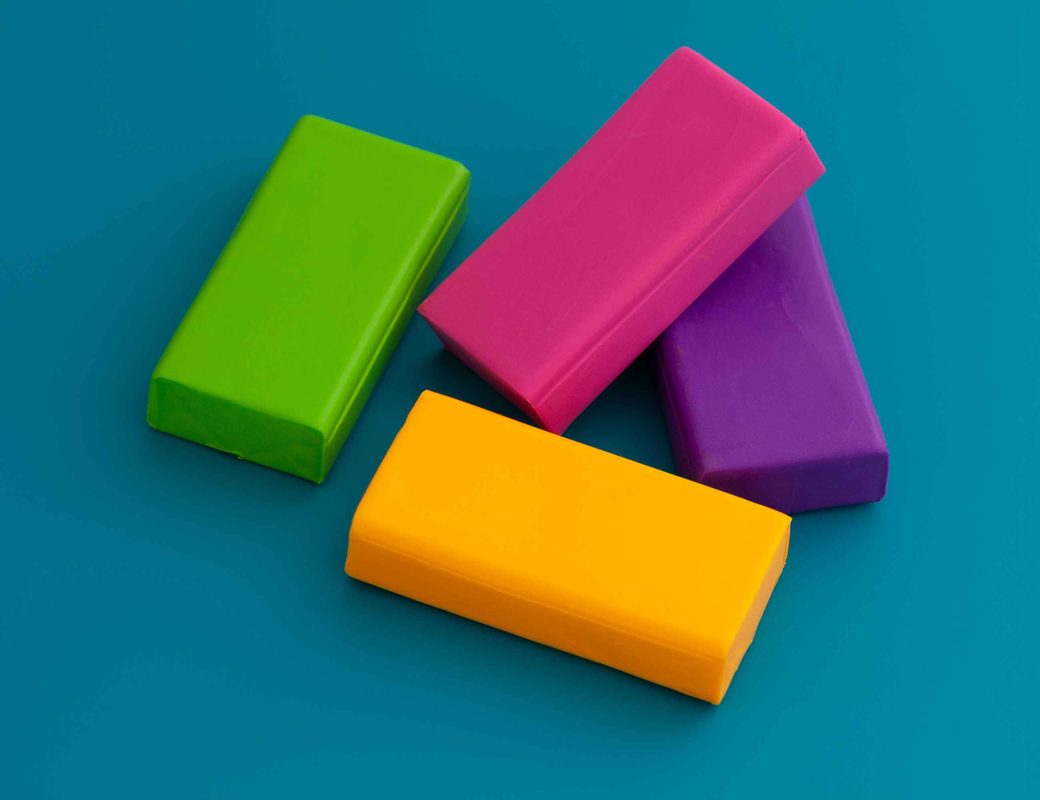
Polymer clay is a synthetic modelling material — PVC-based — that stays soft and workable until it is cured with heat. Despite the name, it is not ceramic or pottery clay, and it does not air-dry. Instead it hardens in an oven at roughly 130 °C, and once baked it becomes solid, slightly flexible and light — which is why it suits earrings so well.
In practice, that means I can roll it, mix custom colours, marble it, texture it, cut it and layer it before anything is permanent. As a result, a large statement shape does not have to carry the weight you would expect from the same shape in metal, stone or ceramic.
Some of my pieces use air-dry clay instead, which dries rather than bakes. Either way, the finished earring is a cured clay body with metal or plastic hardware attached to it — and that distinction matters more than it sounds, as the water section explains.
What polymer clay earrings actually weigh
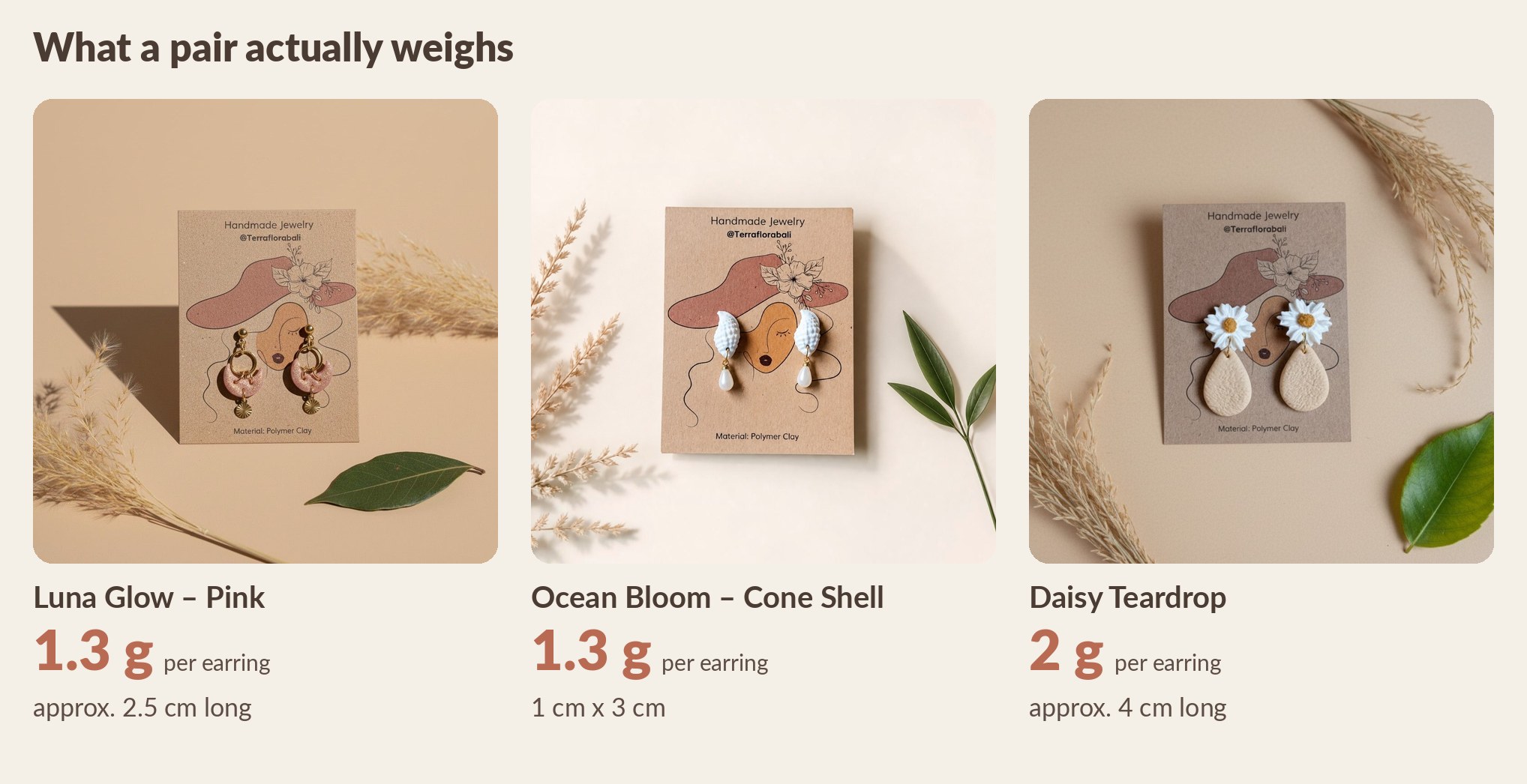
About 1.3 to 2 grams per earring, for mine. Here are the real figures rather than the word “lightweight”:
| Design | Weight per earring | Size |
|---|---|---|
| Luna Glow – Pink | approx. 1.3 g | approx. 2.5 cm long |
| Ocean Bloom – Cone Shell | approx. 1.3 g | 1 cm × 3 cm |
| Daisy Teardrop | approx. 2 g | approx. 4 cm long |
Length is a poor guide to weight. My Daisy Teardrop is 4 cm long and about 2 g. My Ocean Bloom shells are 3 cm and about 1.3 g. The longer pair is the heavier one, but not by as much as the photographs suggest.
However, the clay is only part of the story. Charms, jump rings, connectors and the fastening itself all add weight, so two earrings of the same size can differ noticeably. For example, a chunky layered shape with three jump rings will always outweigh a single thin cut-out of the same height.
Above all, here is the advice that costs me nothing to give: buy from anyone who publishes the grams. Specifically, if a shop tells you a pair is “lightweight” but will not tell you what it weighs, you are being asked to take an adjective on trust. In particular, that matters if heavy earrings bother you — because “light for a statement earring” and “light” are not the same claim.
Are polymer clay earrings durable, and how long do they last?
Properly cured polymer clay is strong and slightly flexible rather than brittle, so a well-made pair handles normal daily wear for years. Handmade does not mean indestructible, though, and it is worth knowing where the actual weak points are.
The clay body itself is rarely the problem. Instead, the vulnerable parts are the thin decorative areas, the drilled holes, and the joins between components — a jump ring, a glued post, the point where a dangle meets the piece above it. Consequently, most damage I hear about is a connection failing, not a shape snapping in half.
Treat them as jewellery rather than as pocket contents. That single habit does more for their lifespan than anything I could put in the finish.
For everyday wear they are genuinely good, and the low weight is the reason. Similarly, you can wear a small floral stud you forget about by lunchtime, or a larger dangling shape, without the pulling sensation heavier materials give you by the end of a day. Please do not deliberately bend them to test the flex, though. I know it is tempting.
Water, cleaning and storage — the short version
Polymer clay is waterproof once it is cured. It is non-porous, so rain or a splash at the beach does nothing to it. Air-dry clay is a different story — it is not waterproof, so if a pair of mine is air-dry clay, keep it away from water properly.
Either way, your earring is not made entirely of clay. There are stainless steel posts, jump rings, charms, glue and finishes in there too, and those are the parts that mind.
Accordingly, I do not recommend showering or swimming in them. In other words, it is not the clay I am worried about — it is the metal hardware, which reacts to repeated soaking, salt water and chlorine long before the clay ever would.
For cleaning, a damp cloth or a wet wipe is enough. Afterwards, dry them properly and put them away.
What to avoid is the more useful half of that advice. In particular, several care guides online recommend acetone, bleach wipes or rubbing alcohol. Please do not. Those are solvents, and the surface of a finished piece is sealed and often painted — a solvent strips exactly the layer you are trying to clean. Likewise, keep perfume and lotion off them by putting your jewellery on last.
Storage is simpler still: somewhere clean and dry, not jumbled in with metal chains that can rub, and never under something heavy. There is more to say about all of this, so I put it in one place — how to clean polymer clay earrings, including what the air-dry pieces need instead.
Studs, plastic posts and clip-ons: the three ways they attach
This is the part almost nobody writes about, and it is the part that decides whether you can wear a pair at all. My designs come with up to three different fastenings.
- Stainless steel stud — the standard option, and what most designs ship with, including Luna Glow.
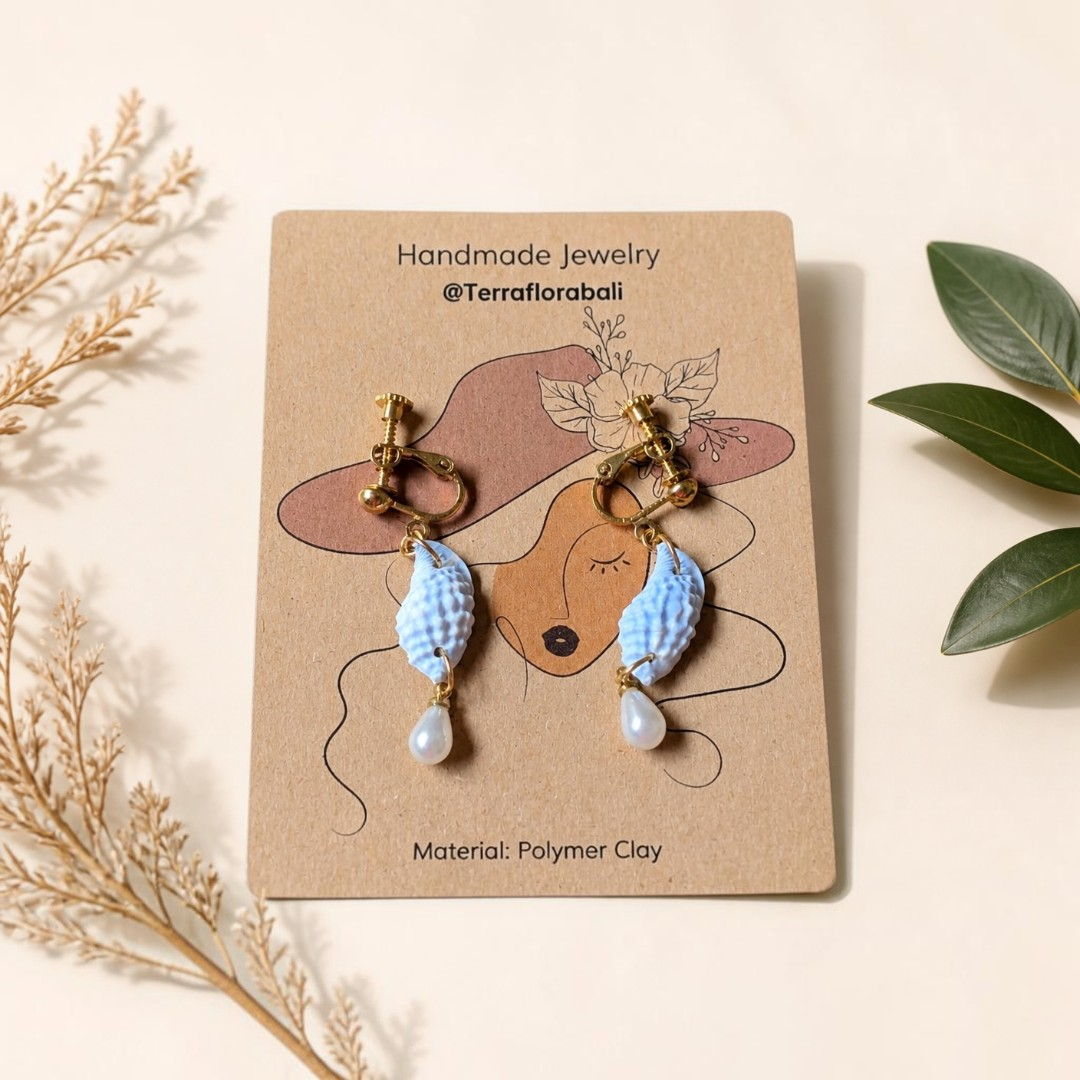
- Plastic stud, hypoallergenic — for sensitive ears. Available on selected designs, including my Ocean Bloom shells, which offer all three fastenings.
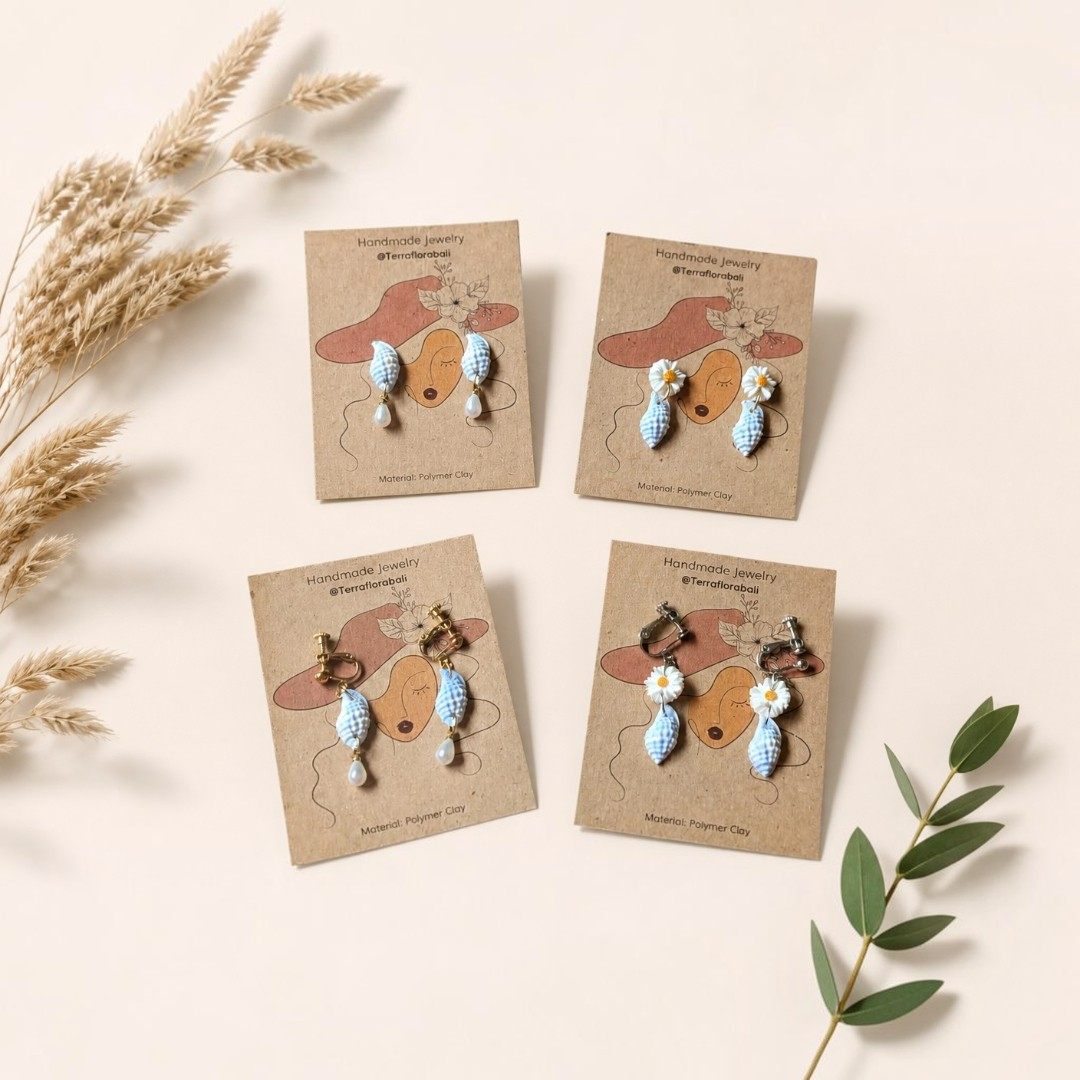
- Clip-on — no piercing needed. Most of my designs show it as an option, and I can make any of them that way.
One honest note on the word hypoallergenic: I use it for the plastic stud only. Stainless steel is a good, low-reactivity material and most people wear it happily. However, it is an alloy that contains nickel, and a reaction to it is a recognised possibility — so calling it hypoallergenic as a blanket claim is not something I am willing to do. If metal is what your ears object to, the plastic post is the option that actually solves it. I go through what each post is actually made of, and which designs carry which, in my guide to earrings for sensitive ears.
Clay also happens to suit clip-ons unusually well. Because a pair weighs a gram or two, there is very little for the clip to hold up — which is precisely why clip-on versions of heavier materials tend to pinch and these do not. If that is the option you need, I go through it properly in my guide to earrings for non-pierced ears, including how to set a screw-back so it holds without digging in.
How I actually make a pair
There are two ways I make a shape, and it depends on the design.
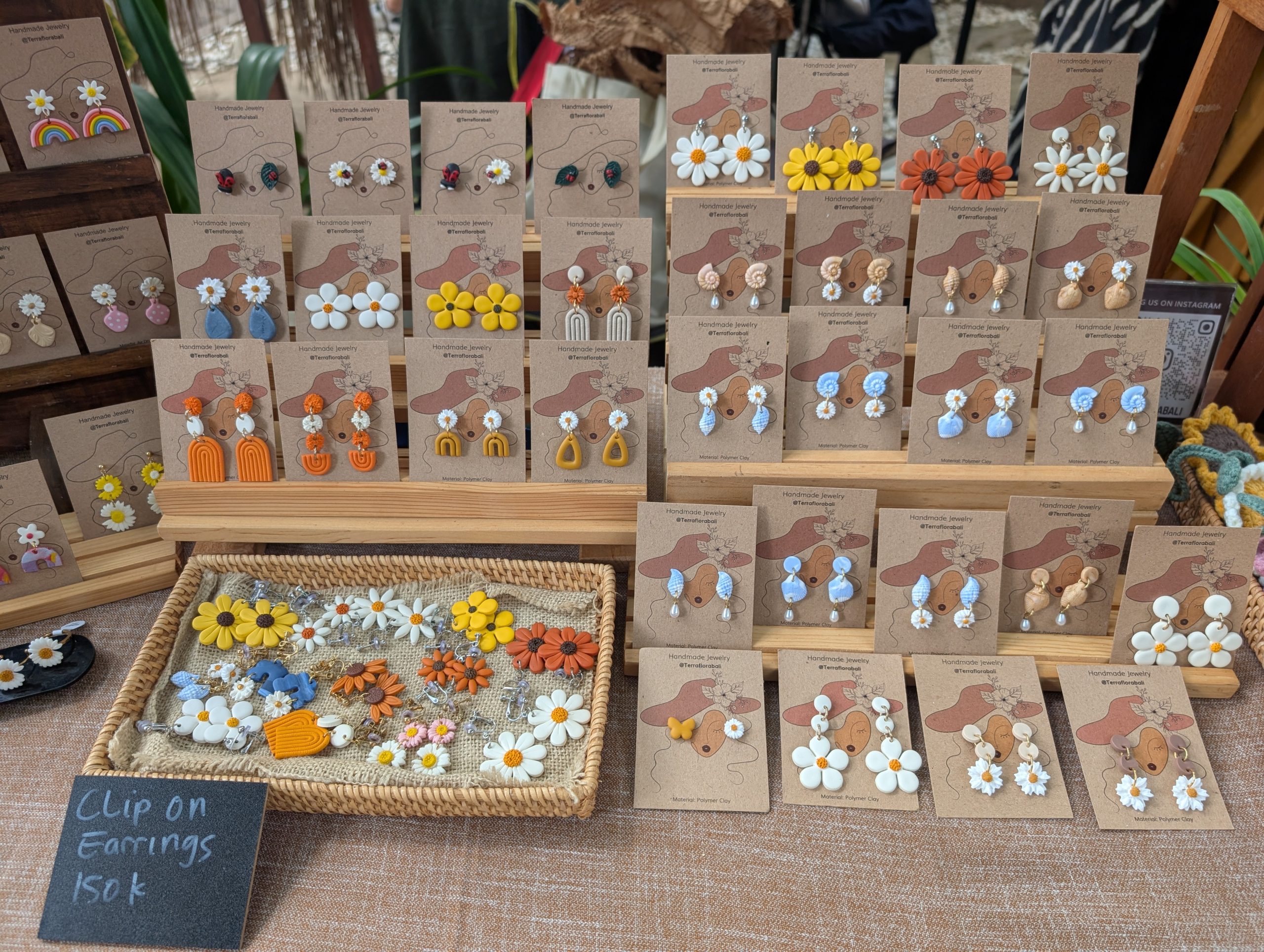
The first one is a mould. I press the clay down into it, then ease it back out. That is how I get the pieces with real depth and texture, like the shells. A flat cutter cannot do that.
The second way is my favourite. I bought a 3D printer and taught myself how to use it, so when I want a shape that nobody sells a cutter for, I just design the cutter and print it myself. Yes, I am that serious about earrings. It also means I can make custom shapes — if someone wants something that does not exist yet, I can make the tool for it first.
Most makers buy their cutters, and they mostly buy them from the same few suppliers. That is a big reason so much handmade jewellery ends up looking the same.
After the shape, both ways are the same. I condition the clay, mix the colours, add any detail or extra layers, then cure it — polymer clay gets baked, air-dry clay is left to dry. Then comes sanding, sealing, and attaching the findings.
One design takes several days, not hours. I could not make big batches even if I wanted to, because every step has to wait for the step before it.
So when I say small batches, I am describing what actually happens rather than marketing it. I make all of this myself, in Bali, and most of the work is waiting.
Why no two handmade pairs are identical
Because they are made by hand, slight differences in colour, pattern, shape and texture are normal. A flower might sit a fraction differently. A marbled pattern will never repeat exactly. Colours can shift a little between batches, and they can look different again on your screen.
Rather than treating that as a disclaimer, I would rather say plainly that it is the reason to buy handmade at all. A machine can make ten thousand identical earrings, and there is nothing wrong with that — it is simply a different thing from what you get here.
That said, there is an honest boundary. Your earrings should still clearly be the pair you ordered. Variation means the daisy sits at a slightly different angle; it does not mean a different flower turns up.
What to check before you buy a pair
A nice photograph tells you almost nothing about how a pair will feel. Here is what I would actually look for, including on my own listings:
| Check | Why it matters |
|---|---|
| Stated weight in grams | “Lightweight” is an adjective. Additionally, 1.3 g is a fact you can compare. |
| Dimensions | Photographs make size genuinely hard to judge. |
| Post material | In effect, it is the part that touches you all day. |
| Fastening options | Specifically, whether a clip-on version exists at all. |
| Care instructions | However, if they recommend solvents, that tells you something too. |
| Handmade variation policy | Overall, every honest maker states one somewhere. |
Handmade polymer clay earrings from Bali
I spent years behind a laptop as a tech recruiter before I stopped and started making things instead. Now I design, cut, bake, sand and pack every pair myself, in Bali — which is where the colours come from, honestly. Bali is bright flowers and warm earth tones at the same time, and both keep turning up in what I make.
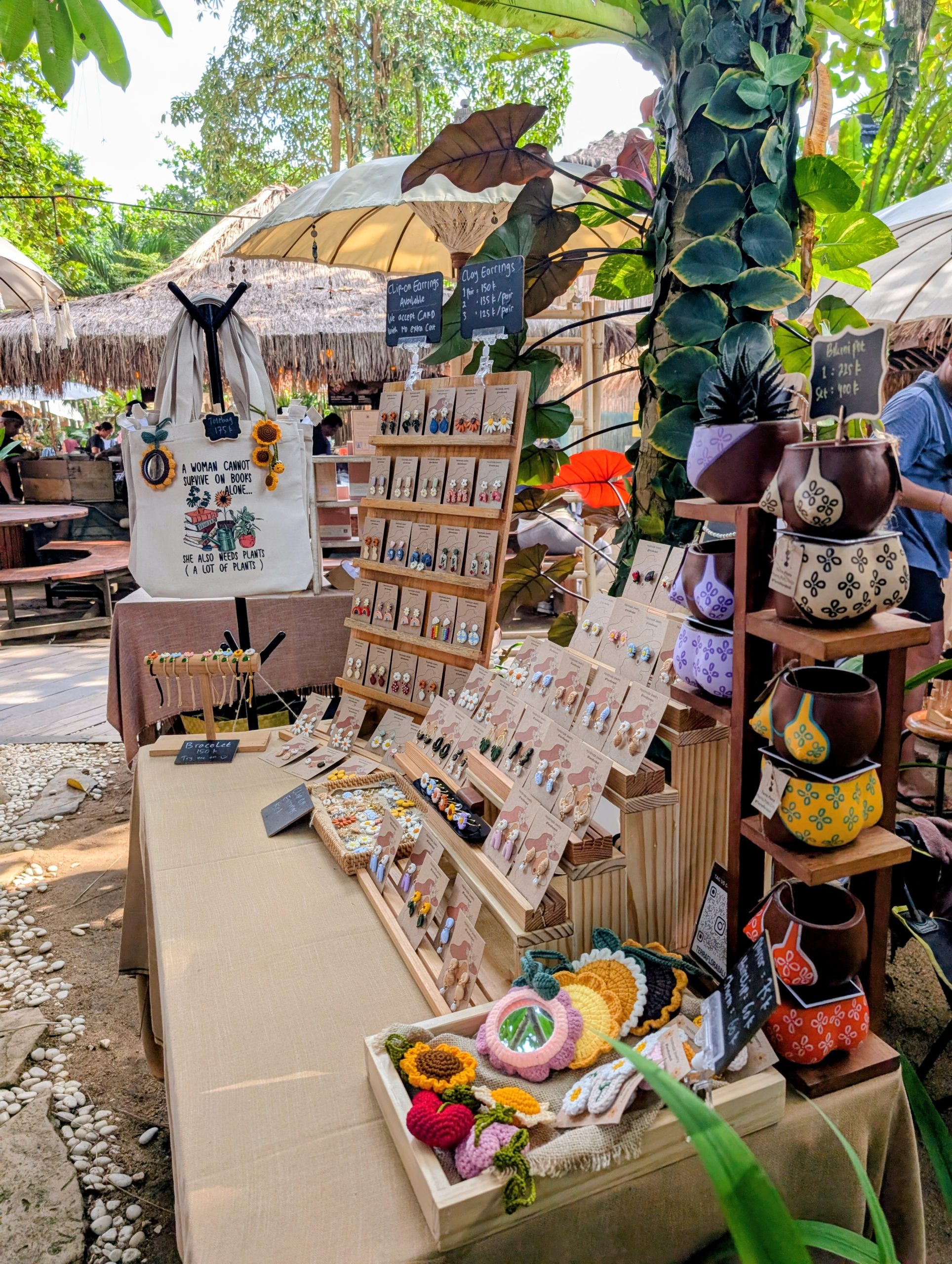
There are two places to find me. Online, at my shop, any time. Otherwise, in person at the La Brisa Sunday Market in Canggu, every Sunday from 10:00 to 16:00 — where you can pick a pair up and feel how light it is instead of taking my word for it.
Frequently asked questions
Are polymer clay earrings lightweight?
Yes. For example, my Daisy Teardrop weighs about 2 g per earring at roughly 4 cm long, and both the Luna Glow and the Ocean Bloom shells are closer to 1.3 g. As a result, you can wear a fairly large shape all day without your ears feeling it. However, the total weight depends on the whole design, because charms and metal hardware add up.
Do polymer clay earrings break easily?
No, not in normal wear. Properly cured polymer clay is strong and slightly flexible rather than brittle. However, the thin decorative areas, the drilled holes and the joins between components are more delicate than the main body, so most damage happens at a connection. Consequently, storing them properly matters more than handling them gently.
Can polymer clay earrings get wet?
Polymer clay is waterproof once cured, so rain or a splash is fine. Air-dry clay is not, so check which one a pair is made from. However, a finished earring also contains stainless steel posts, jump rings, charms and glue, and those react to repeated water, salt and chlorine. Accordingly, I do not recommend showering or swimming in them.
Are polymer clay earrings good for sensitive ears?
They can be, but it depends on the post rather than the clay. My Ocean Bloom designs offer a plastic stud described as hypoallergenic, which is the option I would suggest if metal is what your ears react to. In contrast, I do not describe stainless steel as hypoallergenic, because it is an alloy and that blanket claim is not one I can stand behind.
Can you wear polymer clay earrings without pierced ears?
Yes, if the design comes as a clip-on, and most of mine do. Moreover, clay suits clip-ons particularly well, because at 1.3 to 2 grams there is very little weight for the clip to hold. In other words, you get the size of a statement earring without the pinching that usually comes with heavier clip-on designs.
Are handmade polymer clay earrings all identical?
No. Because every piece is made by hand, slight differences in colour, pattern, shape and texture are part of what you are buying. Similarly, colours can look different depending on your screen. Nevertheless, your pair should still clearly be the design you ordered — variation is a fraction of an angle, not a different flower.
Every pair has its weight, size and fastening options written on the listing — so you know what is arriving before it does.
See the earrings